2026-11-02 LinkedIn
Give your AI your voice
Better prompts give better output (although advanced models show less reliance on detailed prompts).
It still didn’t fix my voice.
My prompts got longer and sharper, and my drafts got cleaner. They also stayed generic. A better prompt doesn’t make a draft sound like me [actually, it makes it sound like everyone else]
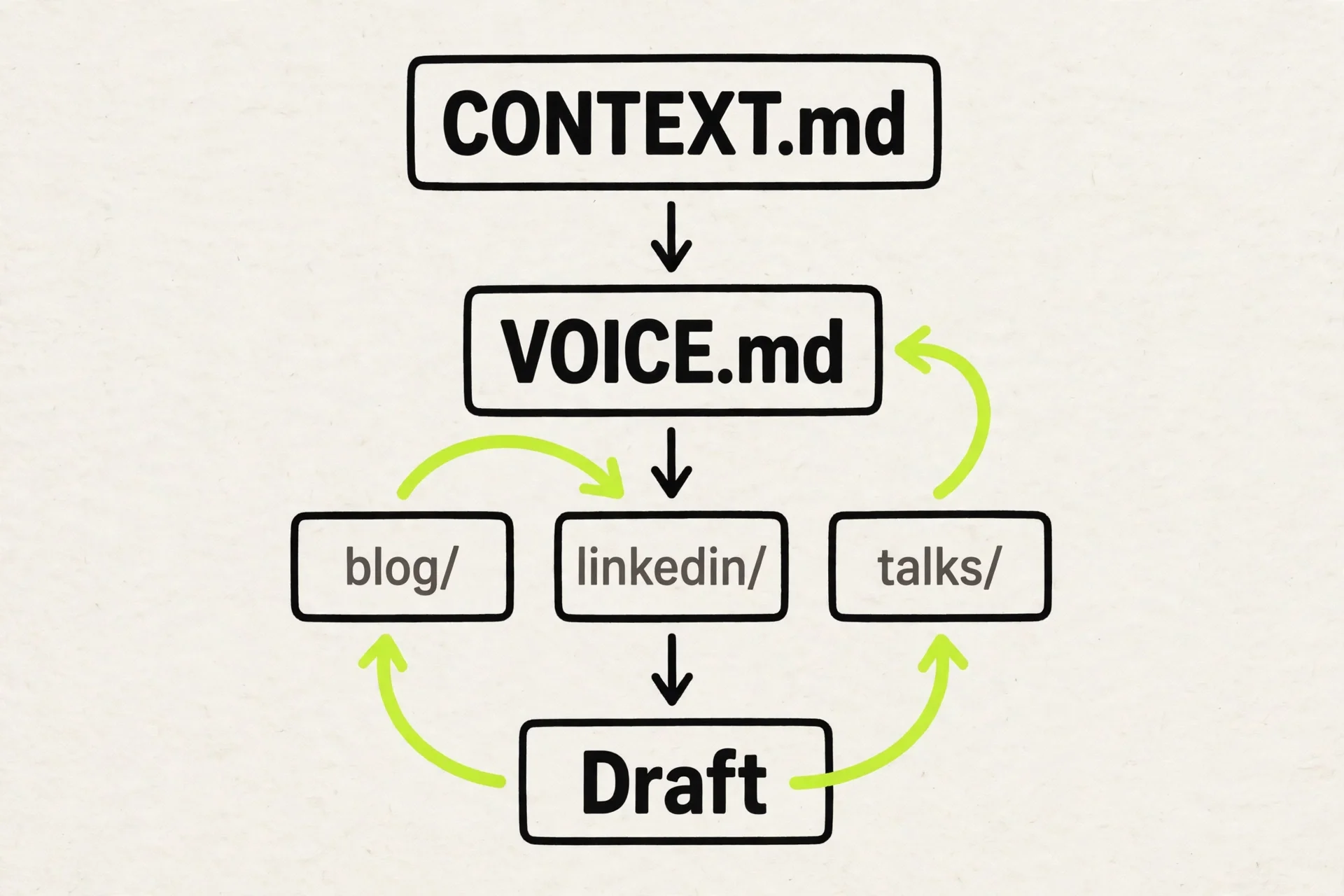
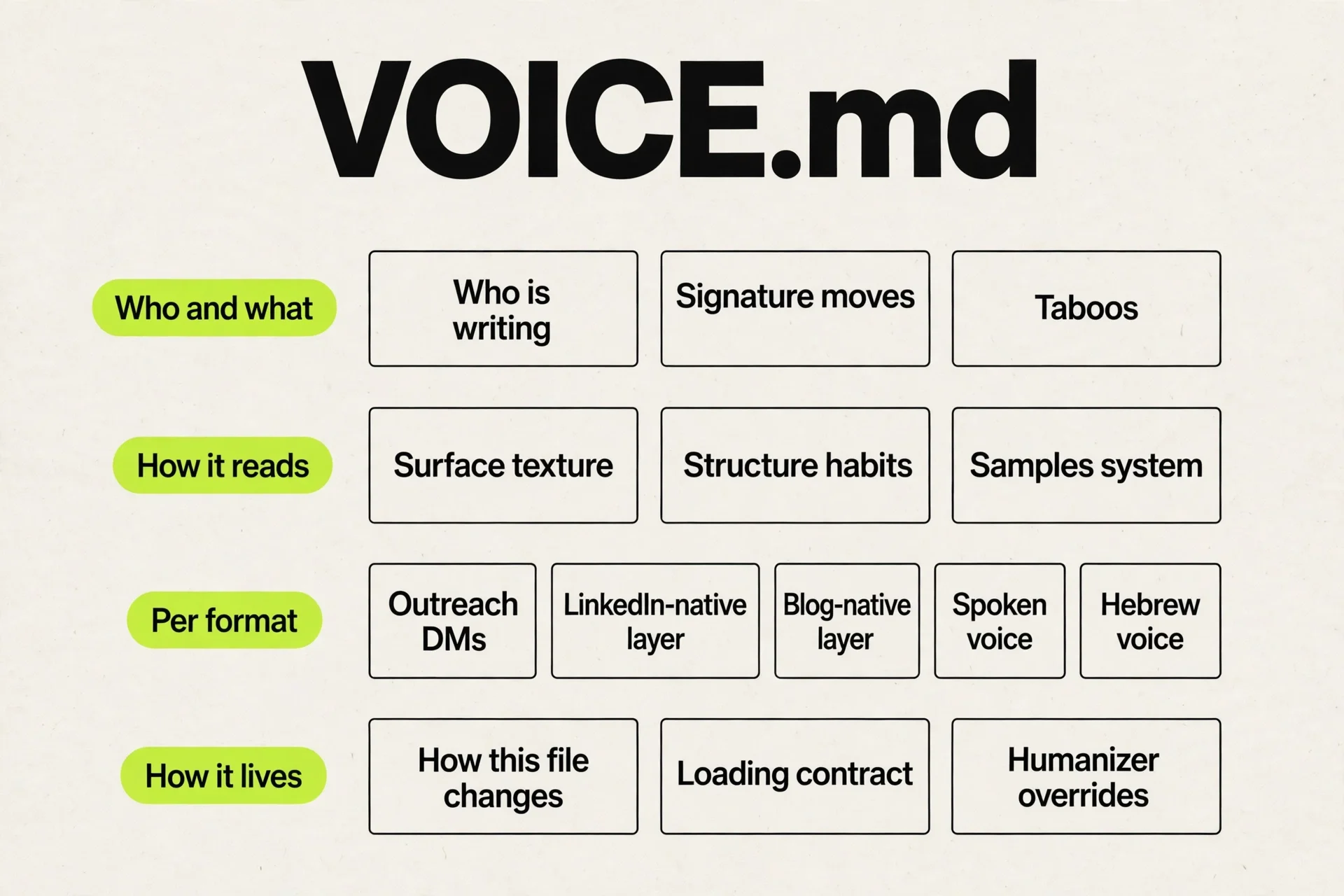
What worked for me was plain. I wrote down how I write, in a file, VOICE.md. Direct sentences and concrete numbers, no marketing register, no buzzwords. The assistant loads the file before it drafts.
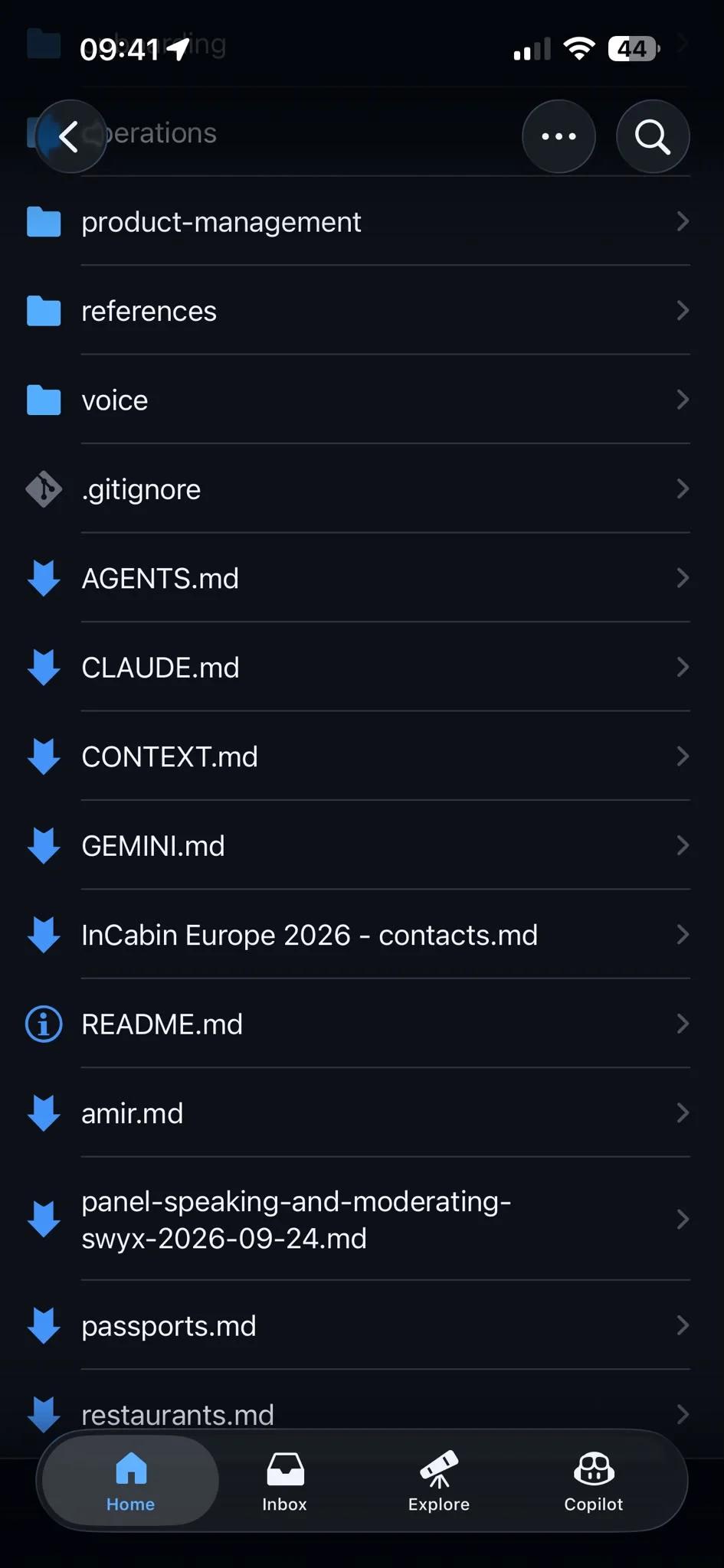
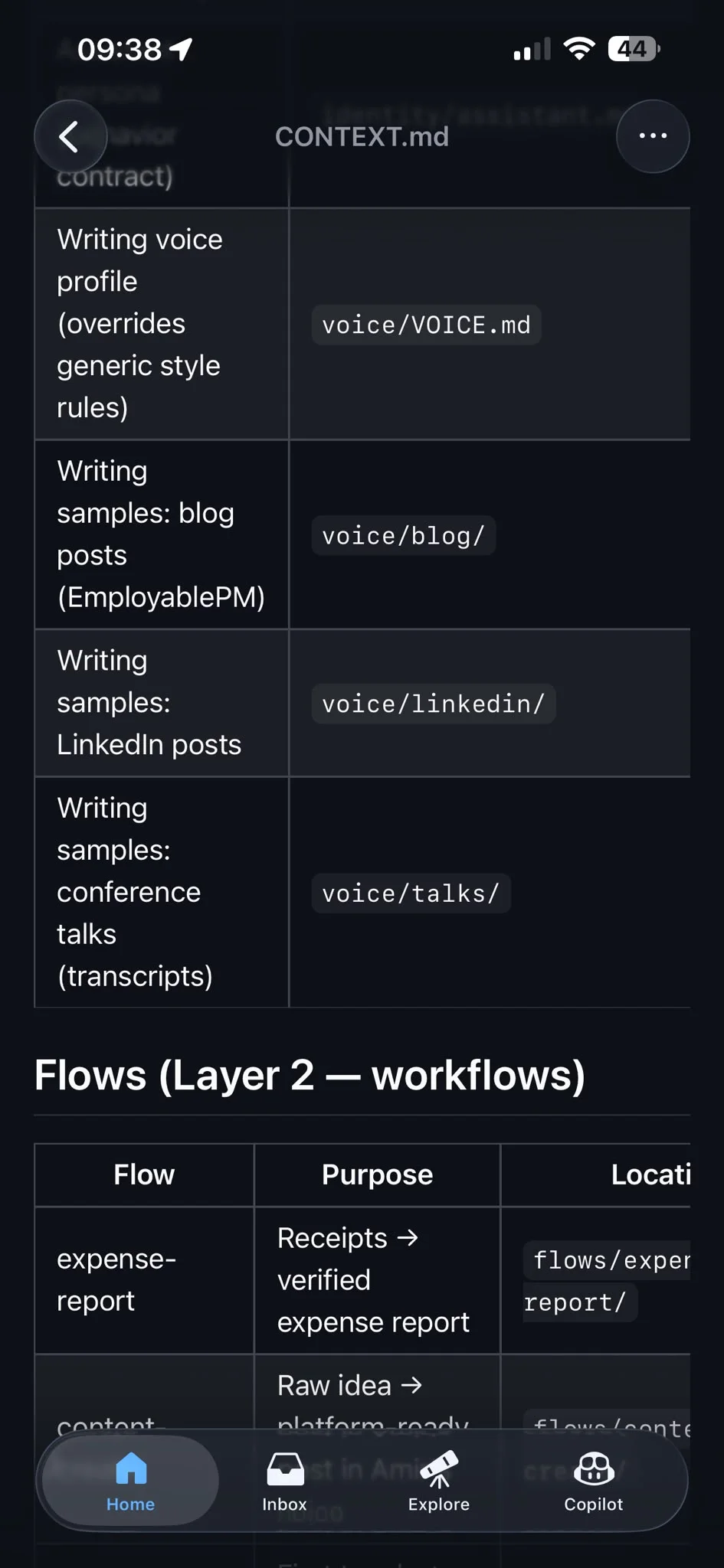
The router file in my context repo points writing work straight at the voice file. Every draft loads VOICE.md before a word is written. No prompt carries my voice, the file does.
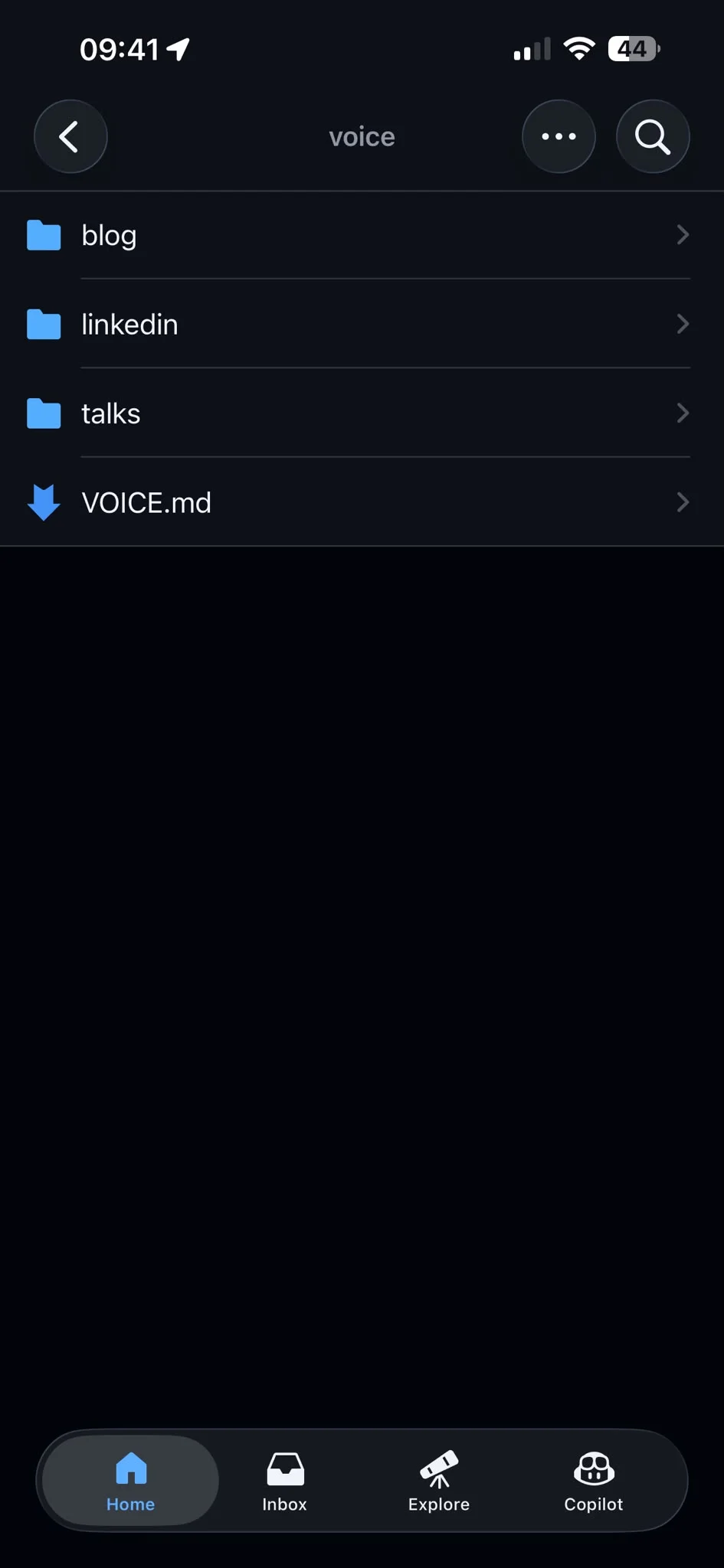
One file carries the rules. Folders next to it carry the proof. LinkedIn posts in one, blog posts in another, talks in a third. They are my own published work, filed by format, and they are what the spec is checked against.
After a post goes out, it joins the samples. The next draft is checked against the nearest ones, so it does not repeat an old angle or drift from how I sound.
When I rewrite a draft, the rewrite becomes a rule in the file. The spec improves the same way the drafts do.
Prompt engineering is the wrong layer for voice. The file is the layer.
Happy to learn of other methods to make the voice sound more like you
#employablepm
Originally posted on LinkedIn — read it there